
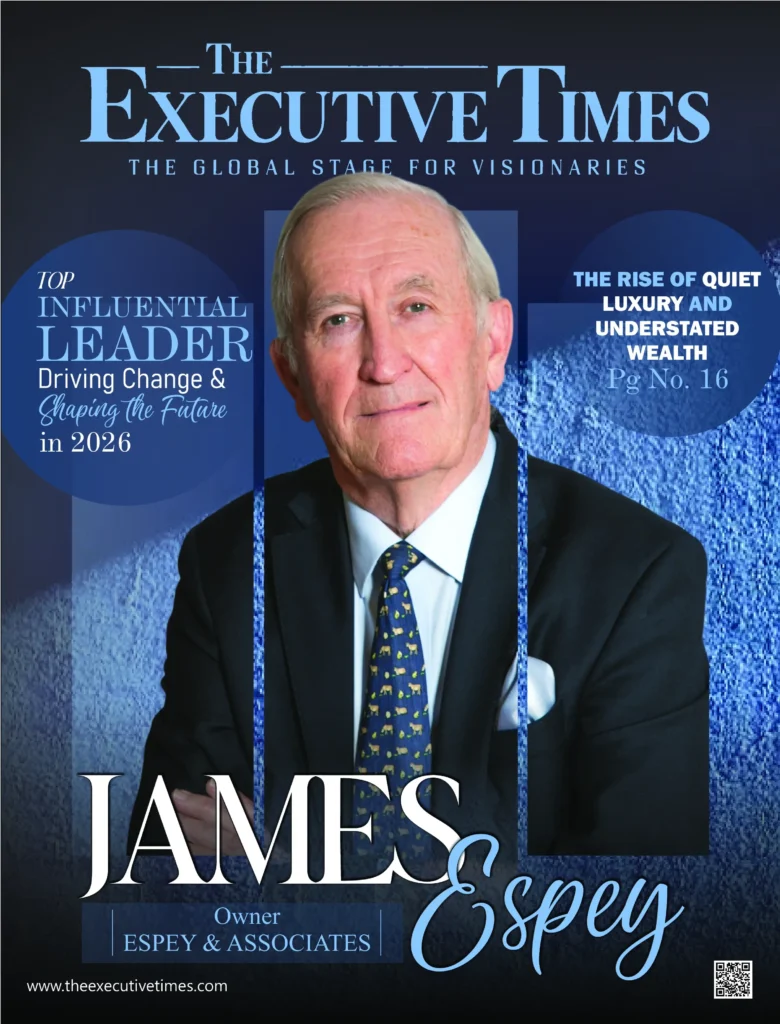
Cover Story -
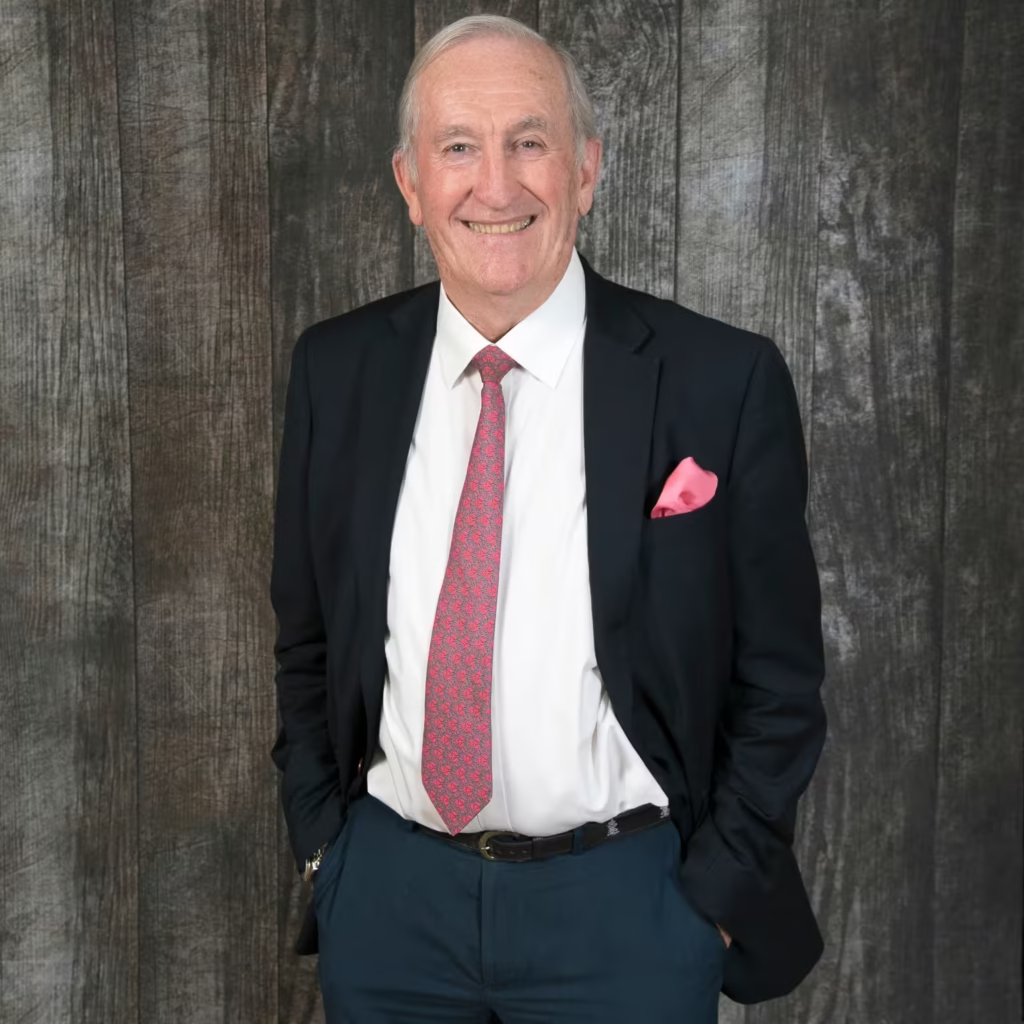
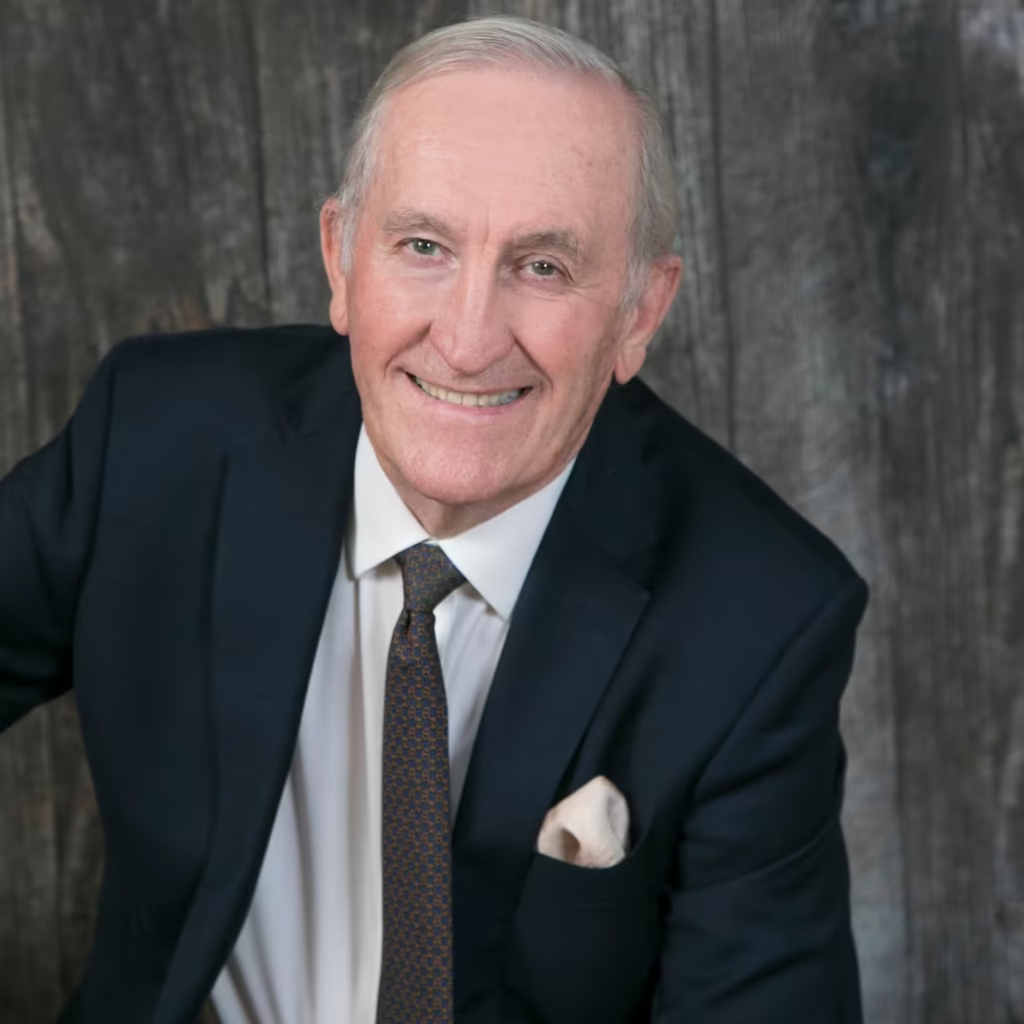
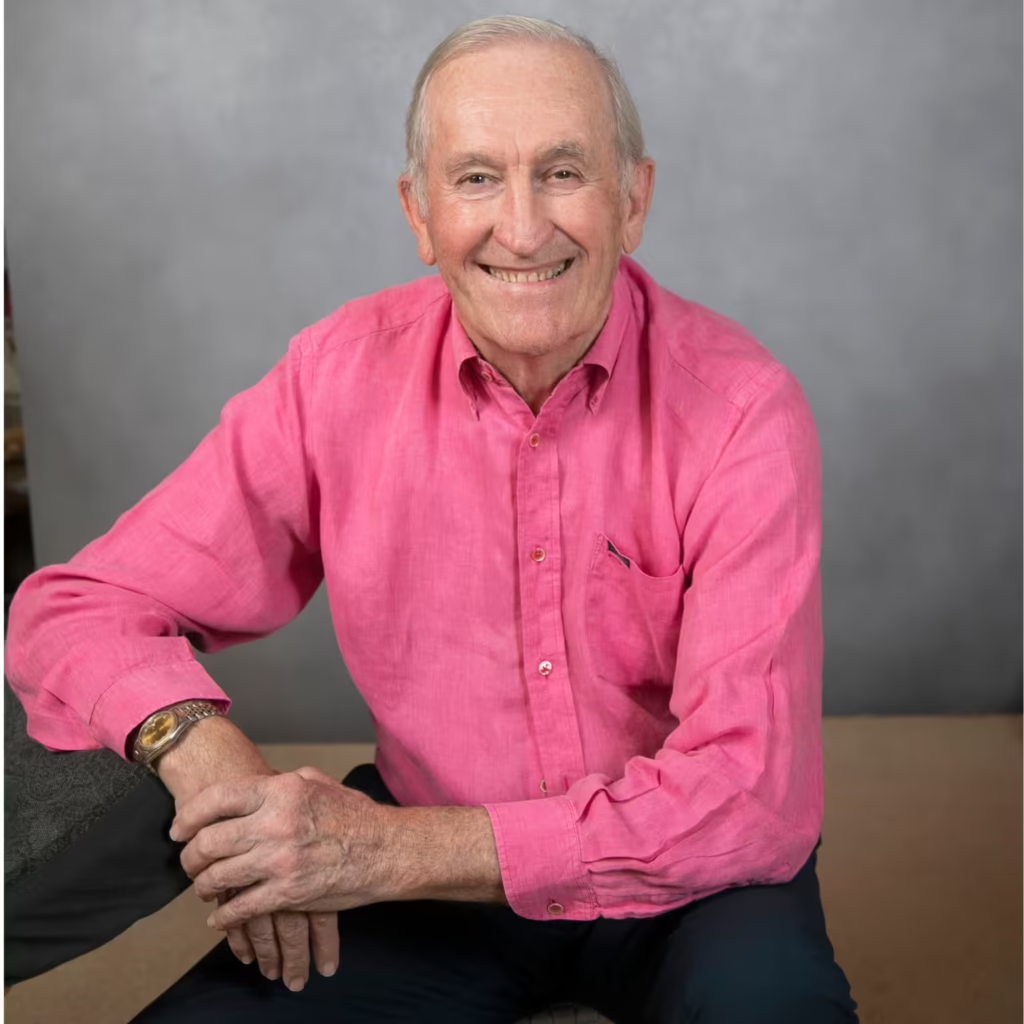
James Espey
Owner of ESPEY & ASSOCIATES
"Top Influential Leader Driving Change & Shaping the Future in 2026"
James Espey: Six Decades of Building Brands, People and Legacy
Some careers are measured by the brands they build. Others are measured by how far their thinking continues after the boardroom.
A Childhood That Made Looking Forward a Habit
In 1950, at just six years old, James Espey was sent to boarding school in Cape Town following his parents’ divorce. Returning home meant an eight-day train journey, twice a year, a routine that continued for ten and a half years.
Espey does not describe those years as a hardship. In fact, he believes they were probably good for him. Sport played its part, as did being reasonably intelligent, but the experience also created something more lasting: a habit of looking ahead.
Education became something to pursue wherever the opportunity existed. The past was something to learn from, not something to remain occupied with.
More than seven decades later, that outlook remains intact. At 83, Espey chairs Wiltshire Distilling Company, approaching the work with essentially the same forward-looking mindset he developed as a child.
The circumstances have changed dramatically.
The principle has not.
The Formula Behind Six Decades of Brand Building
Espey is reluctant to reduce successful decision-making to one universal principle. Ask him for the single formula that guarantees the right outcome and he will reject the premise.
What he does offer is a calculation shaped by decades of experience.
Start with vision. Maintain focus. Then take whatever you believe a project will cost and whatever timeline you expect it to require, and double both.
For Espey, this is not pessimism. It is preparation for reality.
People can begin ambitious projects believing the path will be straightforward, only to discover that costs increase, timelines stretch, and unexpected obstacles emerge. The ability to continue when those assumptions prove wrong becomes part of the work itself.
Three qualities sit alongside that calculation: integrity, consistency, and courage.
They are not abstract values for Espey. They are practical requirements. Without them, even the best calculation is unlikely to survive the realities of building something over time.
The Achievement That Was Never About the Money
Espey’s career includes brands that generated several billion pounds for the UK economy. By commercial standards alone, there is substantial achievement to account for.
Yet the milestone he values most sits outside that financial measurement.
He points to the Keepers of the Quaich, a society established to recognise individuals who have made a significant contribution to the Scotch whisky industry. What makes the achievement particularly meaningful to Espey is that the society was created without a profit motive.
Commercial success can generate returns. Contributing to an entire industry without expecting financial reward in return represents something different.
The Keepers meet twice a year at Blair Castle in Scotland, with the Nobility of Scotland serving as patrons. During his involvement, Espey brought prominent speakers to the platform, including former US President Ronald Reagan, retired South African President FW de Klerk, Prince Charles, and Princess Anne.
Reagan was someone Espey personally approached over lunch in New York.
For him, the significance of the society lies precisely in what it was created to give back.
Three Principles That Survived Every Chapter
Across six decades of brand building and boardroom experience, Espey identifies three convictions that have remained constant.
The first is integrity, and specifically integrity that is genuine rather than performative.
The second is belief in people. Building strong teams requires putting ego aside and creating an environment where collective achievement matters more than individual prominence. Espey captures that philosophy through TEAM: Together Everyone Achieves More.
For him, that is not a motivational slogan. It is an operating principle.
The third is persistence.
Stay on the road. Do not abandon the journey because of a temporary obstacle. Do not confuse a short-term difficulty with a permanent structural problem. Keep the long-term objective visible.
Those principles have remained consistent through six decades of brand building, leadership, and the creation of a not-for-profit society at Blair Castle.
They are not ideals Espey aspires to follow.
They are the way he says he works.
The Final Major Project Has a Global Ambition
Today, Espey’s attention is focused on Wiltshire Distilling Company, located on Lord Margadale’s estate, fifteen miles from Stonehenge.
The company’s whisky brand, Witchmark, takes its name from a local mark in the area and is built around local water and local grain. The company has already been recognised as the second highest environmentally responsible whisky company in the United Kingdom, with Espey serving as Chairman.
At 83, he describes it as his last major project.
There is no sense of withdrawal in the statement.
Instead, there is conviction. He believes the team is right, the vision is clear, and English whisky has a genuine future when it is approached properly and authentically.
For Espey, Witchmark represents another opportunity to apply the principles that have guided his career while building something with long-term potential.
Global in Vision, Deliberate in Execution
The five-year ambition is clear: Espey wants Witchmark to become the leading English whisky brand worldwide.
International markets are already part of the thinking, with India currently under serious consideration.
He describes the opportunity as exciting, a word that carries particular weight given the number of markets, brands, and senior figures he has encountered throughout his career.
But the route to that ambition is deliberately measured.
The objective is not to move everywhere at once or grow faster simply for the sake of speed. The ambition can be global while execution remains controlled.
That balance reflects a lesson accumulated over decades: long-term growth does not require reckless acceleration.
The Obstacles That Tested Persistence
Espey does not point to one dramatic crisis as the defining obstacle of his career.
The more persistent challenges were quieter.
Negativity can be difficult to avoid, particularly when trying to build something different. Bureaucracy can become increasingly heavy as organisations grow larger. Both can slow momentum without necessarily creating one obvious moment of crisis.
His response has remained remarkably consistent.
Keep moving.
For Espey, staying on the road was not a complicated strategy or a formal framework. It was simply the refusal to stop.
That mindset can be traced back to the beginning of his story in 1950 and continues into his work today.
Building for Ten Years Instead of the Next Ten Months
Espey’s advice to anyone serious about building something lasting begins with perspective.
He believes most people in any industry are primarily working for themselves rather than for the industry as a whole. Recognising that reality, he says, means being willing to stand apart.
Change jobs when circumstances require it. Make decisions that serve the long-term objective. But when leaving an organisation, never damage the relationship by running it down publicly.
The reason is practical as much as professional. The industry remembers, and the organisation criticised today could eventually become the company acquiring yours tomorrow.
Courage, commitment, and tenacity matter, with Espey deliberately emphasising the last of the three.
His recommendation is to think in minimum ten-year terms. Short-term targets and bonus cycles can create an excessive focus on immediate results, while meaningful brands and organisations require much longer horizons.
His international perspective extends beyond business strategy as well.
When travelling, learn a few words in the local language. Eat the local food. Respect the culture you are entering. A person’s first language may be someone else’s fourth, and understanding that difference changes the way international relationships are approached.
For Espey, the world is a small village.
After six decades of working across brands, markets, industries, and relationships, it is a principle he has had plenty of time to test.
And the lesson remains the same: look forward, keep learning, stay the course, and build for a future that is larger than the moment in front of you.