Fragile Truce Gives Way to Renewed Conflict
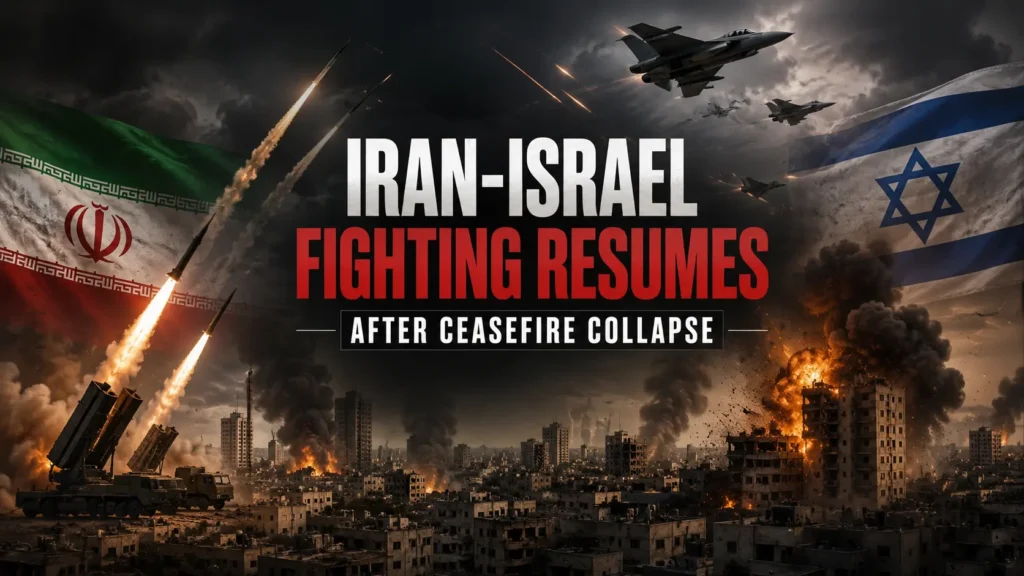
Fighting between Iran and Israel has resumed after a short lived ceasefire collapsed, triggering renewed missile strikes and military operations across the region. The escalation has heightened fears of a broader regional conflict, with both sides accusing each other of violating the truce and refusing to back down from their strategic objectives.
“Ceasefires often pause the violence. They rarely resolve the tensions that caused it.”
Regional Security Concerns Intensify
The renewed hostilities have prompted neighboring countries and international organizations to call for immediate restraint. Governments across the Middle East are closely monitoring developments as concerns grow that continued military exchanges could threaten regional stability, disrupt trade routes, and increase humanitarian risks.
Global Markets React to Rising Uncertainty
Financial markets responded cautiously to the renewed conflict, with investors moving toward traditional safe haven assets while energy prices strengthened on concerns over potential supply disruptions. Analysts warn that prolonged instability in the region could increase volatility across commodities, currencies, and global equity markets.
Diplomatic Efforts Continue
The United Nations, the United States, and several European and Gulf nations have renewed diplomatic efforts aimed at restoring the ceasefire and preventing further escalation. While negotiations remain active behind the scenes, officials acknowledge that rebuilding trust between the two sides will be increasingly difficult following the latest exchanges.
Looking Ahead
The coming days are expected to be critical for determining whether diplomatic channels can prevent a wider regional confrontation. Military developments, international mediation efforts, and political decisions from both Tehran and Jerusalem will likely shape the trajectory of the conflict and its impact on global markets and regional security.