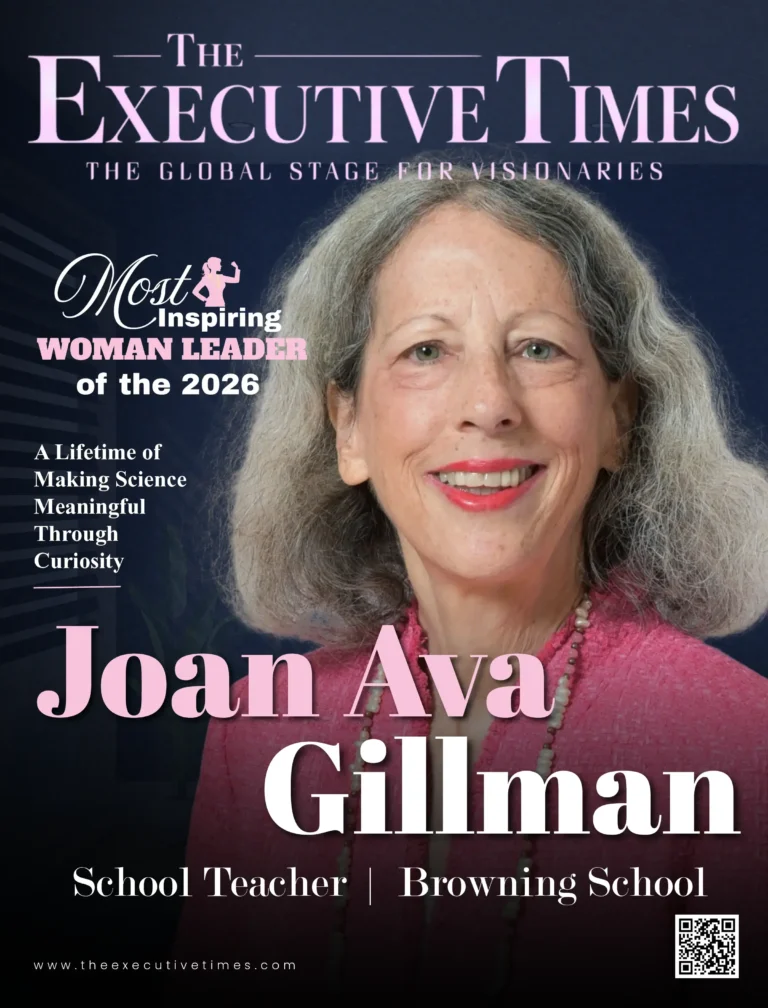
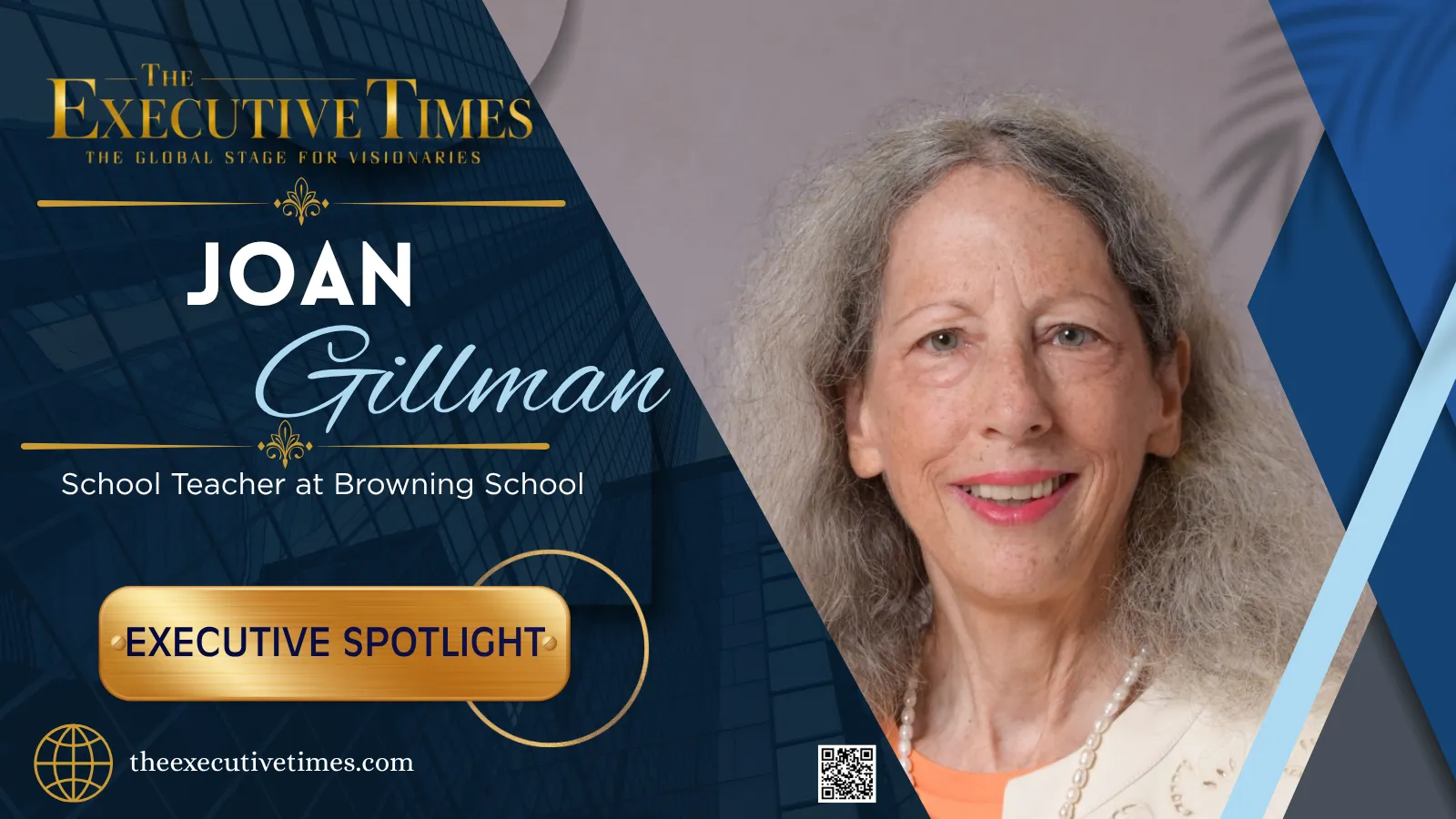
A Lifetime of Making Science Meaningful: Joan Ava Gillman’s Journey of Curiosity, Creativity and Inclusive Education
For Joan Ava Gillman, science has never been confined to textbooks, definitions, or classroom explanations. It is a process of curiosity, experimentation, and discovery that encourages students to ask questions and understand the world around them. This philosophy has guided more than 44 years of her career in education, shaping her teaching methods, curriculum development, and commitment to helping every student discover their potential.
Currently a School Teacher at The Browning School in New York City, Gillman teaches science exclusively in the Lower School, working with students in kindergarten, second grade, and fourth grade. Her professional experience spans schools across New York and New Jersey, alongside contributions to educational publications, science organisations, and international initiatives.
Her work reflects a consistent belief that meaningful education begins when students are encouraged to explore, participate, and learn through experience.
Where Curiosity First Took Root
Gillman’s relationship with science began during childhood. She was fascinated by snowfall and would measure its accumulation, monitor temperatures, and observe changing weather conditions. At home, she experimented with powders and liquids, built shoebox robots with her older brother, and created an imaginary town using building sets.
Her interest in teaching developed through community involvement during high school. She taught elementary students to play the recorder, helped children with mathematics, and organised playground activities designed to include everyone. She also taught swimming to children with special needs and occasionally substituted as a ballet teacher.
These early experiences helped establish a principle that continues to influence her professional life: every child deserves the opportunity to learn, participate, and succeed.
Gillman pursued this interest academically, earning a Bachelor of Arts in Education, summa cum laude, from Felician College, now Felician University, in 1980. She subsequently completed a Master of Arts in Education at New York University in 1982.
One particularly influential experience came during her student-teaching placement at P.S. 47, a junior high school for deaf students. She observed students learning electronics by constructing a miniature amusement park featuring working rides and attractions. The project demonstrated how practical, visual, and tactile experiences could make complex scientific ideas more accessible.
That experience strengthened her commitment to hands-on education, which would become a defining feature of her teaching approach.
A Career Built Across New York and New Jersey
Gillman began her teaching career in 1982 at St. Angela Merici School in the Bronx, where she worked as a fifth-grade teacher. Her professional journey subsequently included positions at Joytown Kent Elementary School, the Bede School in Englewood, the Professional Children’s School in New York, Anna C. Scott Elementary School in Leonia, and Yeshivat Noam in Paramus.
At the Professional Children’s School, she spent two decades teaching academic subjects to fourth- and fifth-grade students, as well as mathematics and science in sixth grade. She also managed the middle school’s Student Government programme.
In 2008, Gillman joined the Calhoun School in New York City, teaching fifth- and sixth-grade science for ten years. She moved to The Browning School in 2018, where her current teaching responsibilities are focused exclusively on the Lower School. She teaches science to kindergarten, second-grade, and fourth-grade students.
She also leads the school’s K-8 Green Team, which brings together students across the Lower and Middle School grades. Her interaction with middle school students takes place through Green Team meetings rather than classroom science instruction.
Across these different institutions and age groups, one principle has remained consistent: students do not all learn in the same way, and teaching must respond to those differences. Gillman does not believe in a one-size-fits-all classroom. Instead, she focuses on approaches that allow individual students to understand concepts through methods suited to their learning needs.
Turning Scientific Ideas Into Practical Experiences
For Gillman, students understand science more deeply when they can experiment with ideas rather than simply memorise information. Her classroom activities are designed to make scientific concepts tangible through construction, observation, testing, and problem-solving.
One example is her fourth-grade Straw Rocket unit. Students build rockets using straws, clay nose cones, and fins before testing different launch angles and measuring flight distances. They examine their results, make adjustments, and repeat the process when their initial attempts do not work as expected.
The activity introduces students to experimentation and measurement while teaching them that unsuccessful attempts can become valuable opportunities to learn.
Her second-grade engineering activity follows a similarly imaginative approach. Students are presented with a story involving a family of four elephants and challenged to design a bridge using recycled materials and craft supplies. Their structure must support two adult elephants and two calves.
The exercise brings science, engineering, mathematics, and art together in one practical challenge, allowing students to apply different skills while developing creative solutions.
Gillman’s commitment to student development also extends beyond scheduled lessons. She makes herself available before school to support students who need additional help, reinforcing her belief that learning should be responsive to individual needs.
Taking Environmental Responsibility Beyond the Classroom
At The Browning School, Gillman leads the student-run Green Team, an initiative that encourages environmental responsibility and active community participation across grades K-8.
Students contribute a weekly Green Action of the Week, organise cleanups in Central Park, take part in Biodiversity Week challenges, invite guest speakers, and conduct fundraisers for causes that include hurricane relief.
Her objective is to help students develop compassion for living things while understanding that their individual actions can contribute to positive change.
Lessons about global water scarcity have also encouraged students to become involved in the initiative. These experiences demonstrate how scientific education can move beyond classroom discussions and inspire students to engage with issues affecting communities and the wider environment.
Through the Green Team, Gillman gives students opportunities to connect what they learn with practical responsibility, helping them recognise their potential as changemakers.
Navigating Challenges Through Adaptability
Gillman’s long career has included experiences that tested her ability to respond to different learning needs and unexpected situations.
During her first year of teaching in the South Bronx, she managed a fifth-grade classroom in which students had six different reading levels. Their abilities ranged from second-grade to tenth-grade levels, requiring her to adapt her approach to a particularly wide range of educational needs.
Another defining experience occurred in 1986, when the Challenger space shuttle disaster interrupted a science lesson with sixth-grade students who had been closely following the mission. Gillman had to help them understand the tragedy while responding thoughtfully to their questions and concerns. The experience reinforced her awareness that a teacher’s responsibilities extend beyond academic instruction.
The COVID-19 pandemic brought a different kind of challenge. Practical science lessons had to be adapted for remote learning, making it difficult to recreate the experimentation and interaction that were central to her classroom approach.
Gillman responded by sending students and parents lists of household materials that could be used to create simple kitchen laboratories. She then conducted live online demonstrations and guided families through experiments, allowing students to continue learning through practical activities at home.
Her transition to The Browning School also introduced a new teaching experience: working with second-grade students alongside older learners. More recently, she began teaching kindergarten science for the first time. She embraced the transition, and the experience has gone very well so far.
Each of these experiences has reinforced the importance of flexibility, patience, and an understanding of the individual needs of students.
Science Education, Writing and Professional Contributions
Gillman’s interests and contributions extend beyond her classroom. She is also a classically trained pianist and violinist, performing with the Bergen Philharmonic Orchestra, the North Jersey Symphony, and The August Symphony Orchestra. At least four times a year, she volunteers at nursing facilities, performing music for residents.
Her professional contributions to science education include articles published in the STANYS Bulletin and Science and Children, the latter associated with the National Science Teaching Association.
Her curriculum, Straw Rockets Are Out of This World, was published in Science and Children in 2013 and subsequently reprinted in the 2016 book Bringing STEM to the Elementary Classroom. She also contributed materials to Corwin Publishers’ What Teachers Want to Know About Teaching Climate Change.
In 2011, her curriculum addressing the Great Japanese Earthquake and Tsunami received a grant from Cornell University’s East Asian International Studies programme. She was also recruited as a teacher ambassador for NASA’s Mars Atmosphere and Volatile Evolution (MAVEN) mission.
Her professional involvement includes serving as an elementary-level Subject Area Representative for the Science Teachers Association of New York State in New York City. In this role, she contributed to conference workshops, leadership meetings, and speaker recruitment.
Gillman has also presented at events organised by NSTA, STANYS, the Science Council of New York City, NYSAIS Diversity Symposium, and STEMTeachersNYC. She additionally helped plan the SCONYC conference in 2024.
Her continuing professional development includes becoming a certified National Geographic educator in 2019 and completing the Modern Classroom Project’s five-week course in 2022. She is also an active member of SEEDS, Science Educators for Equity, Diversity, and Social Justice.
Recognition and International Engagement
Gillman’s contributions to education have received recognition from several institutions and professional organisations.
In 2017, the Calhoun School presented her with its Urhy/Thompson Award. Marquis Who’s Who has recognised her among its Top Educators and Who’s Who of Professional Women, and presented her with a Lifetime Achievement Award. She has also been recognised by Kappa Delta Pi as a Legacy Member.
Her subsequent honours include the CXO Time Award for Most Inspiring Educator in Science Education in 2024. She was also recognised among CXO Time’s Top 10 Leaders Shaping the Future and CIO Views Magazine’s Top 10 Empowering Women Leaders of the Year.
In 2025, The Executive Lens included her among its Top 5 Women to Know, while MSN News featured her in the publication’s 5 Female Leaders Who Went from Vision to Victory.
The International Association of Top Professionals named her Top Educator of 2025. In 2026, the organisation recognised her as Top Educator of the Decade, included her among its Top 50 Fearless Leaders and Top 25 Global Impact Leaders, and named her Woman of the Year.
Her engagement with international educational and development initiatives continued in early 2026, when she joined the Forttuna Education Council’s Global Advisory Board.
In March 2026, Gillman was appointed as a United Nations Representative to the AWWG at the United Nations Economic and Social Council (ECOSOC). Reflecting on the appointment, she described it as both a privilege and a responsibility, expressing her intention to contribute to global dialogue, policy advocacy, and collaboration aligned with the United Nations Sustainable Development Goals.
She specifically highlighted sustainable development, inclusive growth, and international cooperation as areas of interest. She also expressed gratitude to those who had supported her journey and reaffirmed her commitment to service, collaboration, and initiatives capable of creating measurable, long-term impact.
Continuing to Evolve as an Educator
The Browning School’s guiding values of Curiosity, Honesty, Dignity, and Purpose closely reflect Gillman’s own educational philosophy.
Since the school began implementing the Next Generation Science Standards in summer 2024, she has worked with colleagues to update its curricula. During the most recent summer period described in her account, she devoted nearly 35 hours to revising the kindergarten and fourth-grade curricula to align them with NSTA and Next Generation Science Standards requirements.
Teaching kindergarten science for the first time has also marked a new chapter in her work at The Browning School. The transition has gone very well so far, adding another age group to her Lower School teaching responsibilities alongside second and fourth grades.
Her broader vision for education centres on interdisciplinary learning. She encourages students to connect different subjects rather than treating each area of knowledge as an isolated discipline. This approach reflects the way real-world problems often require multiple perspectives, skills, and forms of understanding.
For aspiring educators, her advice is to remain committed to learning, maintain a sense of humour, and seek support from colleagues whenever necessary.
Joan Ava Gillman’s career represents decades of teaching, curriculum development, professional engagement, and educational recognition. Yet the impact of her work is also visible in the everyday experiences of students who have been encouraged to question, experiment, build, and discover.
Through curiosity, creativity, patience, and inclusion, she continues to demonstrate that science education can do much more than explain how the world works. It can help young people develop the confidence to explore it, understand it, and find their place within it.