
Cover Story -
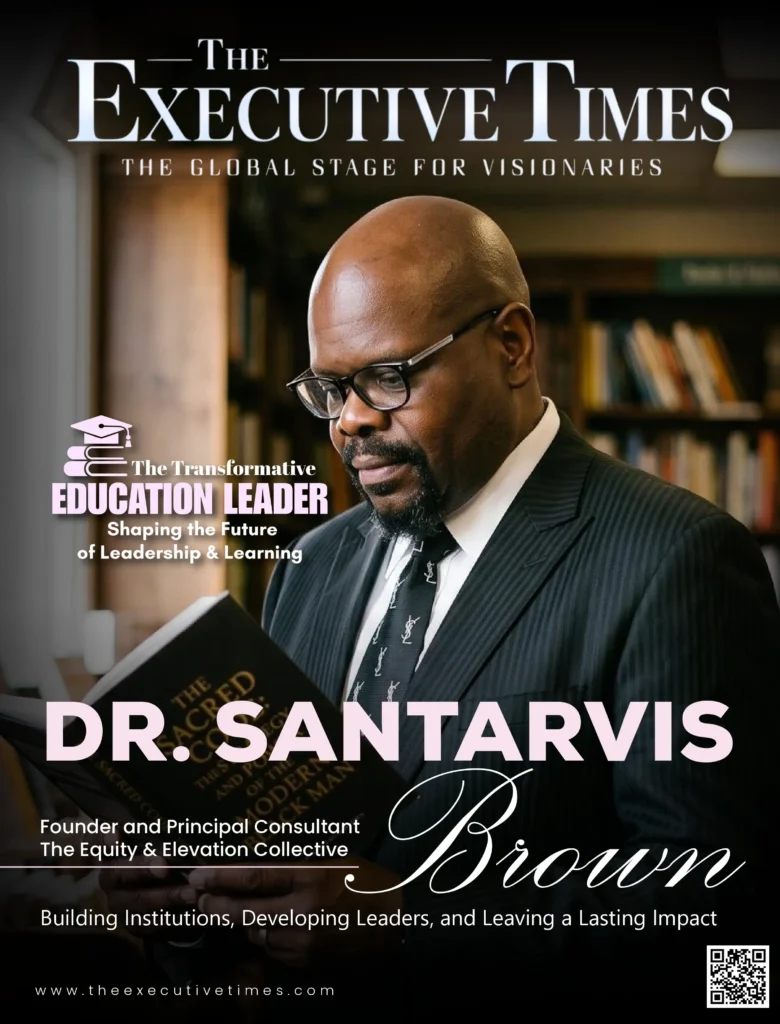
Dr. Santarvis Brown
Founder and Principal Consultant at The Equity & Elevation Collective
"The Transformative Education Leader Shaping the Future of Leadership & Learning"
Dr. Santarvis Brown: Building Institutions, Developing Leaders, and Leaving a Lasting Impact
For Dr. Santarvis Brown, leadership is a responsibility held in trust, measured by the people empowered and the institutions strengthened along the way.
From the Classroom to the Systems That Shape It
Education first drew Dr. Santarvis Brown toward teaching, guided by a conviction that learning can change the direction of a person’s life. Yet his ambitions extended beyond individual classrooms. He was equally interested in the institutions, leadership structures, and organizational decisions that influence how education is experienced and delivered. Over time, that wider perspective became central to his professional journey.
His career expanded across roles as a principal, superintendent, university administrator, professor, executive director, nonprofit leader, consultant, researcher, board member, author, and pastor. Each position offered a different opportunity to influence people and organizations. Today, as Professor of Management and Leadership at Excelsior University, he brings these experiences into the preparation of professionals who must make ethical decisions, think strategically, earn trust, and guide meaningful organizational change.
His work also reaches beyond higher education through executive consulting, ministry, writing, public speaking, podcasting, and leadership development. Although the settings vary, the purpose remains consistent: helping people and institutions operate with greater clarity, courage, compassion, and direction.
Vision, Character, and the Courage to Act
Dr. Brown’s leadership philosophy rests on three connected principles: vision, authenticity, and courage. Vision requires more than imagining a better future. It involves understanding present circumstances, identifying what can change, communicating a direction others can believe in, and developing the strategy needed to move toward it. Throughout his career, this approach has helped him navigate transitions, organizational growth, uncertainty, and reinvention.
Authenticity sustains the trust that leadership requires. For Brown, leaders must communicate honestly, remain transparent about what they know, and acknowledge where they still have more to learn. Their values should be evident in their decisions and conduct, not merely in what they say. Courage completes this foundation by allowing leaders to challenge outdated systems, advocate for others, respond to difficult circumstances, and remain committed to their mission when easier alternatives are available.
Together, these principles shape a practical approach to leadership. Vision without the willingness to act can remain an aspiration, while courage without authenticity can undermine trust. Effective leadership depends on bringing purpose, character, and action into alignment.

Responsibility Beyond the Position
Christian faith is central to how Dr. Brown understands leadership. He regards authority as a form of stewardship rather than ownership, believing that the responsibilities entrusted to a leader are temporary. The obligation is to strengthen what has been placed in one’s care and leave it in better condition for those who follow.
Integrity is equally important. Credibility develops through consistent decisions, honest communication, and personal accountability, particularly when no one is watching. His commitment to servant leadership follows the same principle: a leader’s role is to create conditions in which other people can succeed. Excellence, compassion, innovation, and respect for human dignity must remain part of that responsibility.
For Brown, organizational performance cannot be separated from the people and principles behind it. Results matter, but so does the manner in which they are achieved. Whether his responsibilities involve a classroom, an organization, a church, a board, or a community, the objective is to leave that environment stronger than he found it.
Education That Builds Judgment, Not Just Credentials
At Excelsior University, Dr. Brown works to connect leadership theory with the practical challenges professionals encounter in organizations. His teaching focuses on ethical decision-making, strategic thinking, effective communication, and transformational leadership. The goal extends beyond helping students complete a qualification. He wants them to develop the judgment and confidence required to exercise responsibility once their formal education is complete.
The university serves working adults, military-connected students, and people changing careers, many of whom must balance education with employment, family responsibilities, and financial pressures. Their determination has reinforced his understanding of what teaching can accomplish. Education is not simply the delivery of information; it can help people recognize possibilities they may not have previously considered.
His professional work also includes executive coaching, consulting, board governance training, and keynote speaking across education, nonprofit, faith-based, and corporate settings. Through The LeadershipDoctorSB, the platform he created and hosts, he shares resources for current and emerging leaders on subjects including emotional intelligence, workplace culture, burnout, and organizational trust.
Reading is another part of this commitment. Brown owns TheBannedBook.Shop, an independent bookstore grounded in his belief that access to diverse and challenging ideas contributes to leadership development. For him, reading supports the critical thinking and openness that responsible leadership demands.
Guiding Organizations Through Difficult Change
Some of Dr. Brown’s most demanding professional experiences have involved leading organizations through extended periods of transformation. Restructuring, financial stabilization, cultural renewal, and difficult personnel decisions can create uncertainty even when change is necessary. These circumstances require leaders to address organizational needs while recognizing the people who must navigate the consequences.
His approach has been to communicate urgency without diminishing individual dignity. Transparency, consistent communication, careful listening, and a clear connection to the mission help people understand the purpose behind difficult decisions. Leadership, in these moments, requires both resolve and consideration rather than treating the two as competing priorities.
Brown also recognizes the importance of support during demanding periods. Mentors, prayer, and trusted teams have helped him navigate adversity. He views resilience not as the denial of pain but as the ability to acknowledge difficult experiences and continue forward with greater understanding.
Recognition Is Not the Measure of Impact
Dr. Brown’s professional journey includes a range of recognitions and opportunities. He has served as a Fulbright Specialist, an AGB Pathway to the Presidency Fellow, and an AI 2030 Institute Scholar. His work includes service on the Harvard Business Review Advisory Council and a presentation at the Oxford University Research Symposium. He has received Distinguished Professor honors and recognition as a Top Educator from the International Association of Top Professionals. His work has also appeared on the Nasdaq display in Times Square, and he has authored multiple books addressing leadership, equity, resilience, and faith.
These achievements represent significant milestones, but Brown does not regard recognition as the clearest measure of his contribution. He places greater value on outcomes that emerge through other people: a former student earning a promotion, an organization becoming healthier, or an individual developing greater confidence in their own potential.
Awards and professional distinctions document parts of a career. The influence that matters most, in his view, is visible in the progress of the people and institutions he has served.
The Human Work Behind Leadership
For Dr. Brown, leadership involves more than strategy, planning, and organizational performance. It also takes shape in everyday interactions: a conversation that provides clarity, encouragement offered at a critical moment, or the willingness to remain present when someone needs support. These moments may not appear on a professional résumé, but they influence how people experience leadership.
He does not approach a room with the aim of becoming its most important person. Instead, he considers what the people in that room need, whether that means direction during uncertainty, confidence during difficulty, or the opportunity to contribute and grow. His objective is to help people feel valued while also challenging them to develop their capabilities.
This perspective connects the responsibilities of leadership with the relationships that sustain it. A position can establish authority, but the way a leader treats people determines whether that authority develops into meaningful influence.
Faith, Family, and the Lessons of Teaching
Dr. Brown draws strength from his Christian faith and from his family. His wife, Maria Brown, has been a steady source of support through demanding periods, while his children, Dorrien and Santarvis Jr., influence how he thinks about the legacy he hopes to leave. These relationships help keep professional accomplishments in perspective.
His students have also shaped his understanding of leadership. Many pursue their studies while managing jobs, family commitments, financial demands, and academic responsibilities. Their persistence reminds him that teaching involves more than transferring knowledge. It can cultivate hope by helping people see a future that remains possible despite present pressures.
He finds a related lesson in communities that continue moving forward despite having fewer resources than they need. Their experiences keep his work connected to the realities faced by individuals and families. For Brown, leadership must remain attentive to those realities rather than becoming detached from the people it is intended to serve.

Expanding the Reach of Leadership Development
Looking ahead, Dr. Brown’s interests bring together leadership, education, technology, faith, and social impact. At Excelsior University, he is focused on preparing students for a changing higher-education environment influenced by artificial intelligence, workforce disruption, and growing expectations for flexibility. His wider professional agenda includes further research and writing on ethical leadership, organizational trust, and workplace well-being.
He also intends to continue developing The LeadershipDoctorSB into a practical resource for leaders, alongside expanding TheBannedBook.Shop beyond its role as an independent bookstore into a broader cultural and educational platform centered on reading and dialogue. International collaboration, consulting, board service, and mentorship remain part of this wider effort.
The unifying ambition is to extend impact beyond his own work by developing leaders who can, in turn, support and develop others. This approach treats leadership development not as an isolated achievement but as a process that can continue across institutions, professions, and communities.
Influence Must Be Earned Through Action
Dr. Brown’s advice to emerging leaders begins with an important distinction: receiving a title does not automatically establish influence. Authority may come with an appointment, but lasting credibility develops through integrity, competence, consistency, and service. Leaders must continue learning, remain open to new perspectives, and strengthen their emotional intelligence if they want to preserve the trust of the people around them.
He also believes setbacks should not be treated as automatic disqualifications. Difficult experiences can become sources of learning, provided leaders are willing to reflect on them and carry those lessons into future decisions. Ultimately, he evaluates leadership by the growth it encourages in others. If people become more confident, capable, and courageous through their experience of a leader, that influence has made a difference.
The Same Purpose Across the Classroom, Boardroom, and Pulpit
Beyond his academic and executive responsibilities, Dr. Brown serves as Pastor of Greater Mt. Pleasant African Methodist Episcopal Church. Ministry has reinforced his belief that communities need more than strategy. They also need hope, care, presence, truth, and connection. During his time serving congregations, he has seen membership grow, outreach expand, debt decrease, and new ministries take shape.
His writing and leadership platform extend that work to people he may never meet personally. Through The LeadershipDoctorSB, he addresses the practical challenges of leading with confidence without arrogance, maintaining boundaries without abandoning compassion, and pursuing high standards without burning out. TheBannedBook.Shop expresses a related commitment through access to ideas, critical thinking, empathy, and the freedom to read.
Across education, organizational leadership, ministry, and publishing, Dr. Brown returns to the same priorities: faith, family, and the opportunity to serve. His legacy is not defined solely by the positions he has held or the recognition he has received. It rests in the people who discover greater potential in themselves, the institutions strengthened through his work, and the leaders who carry those lessons forward.