
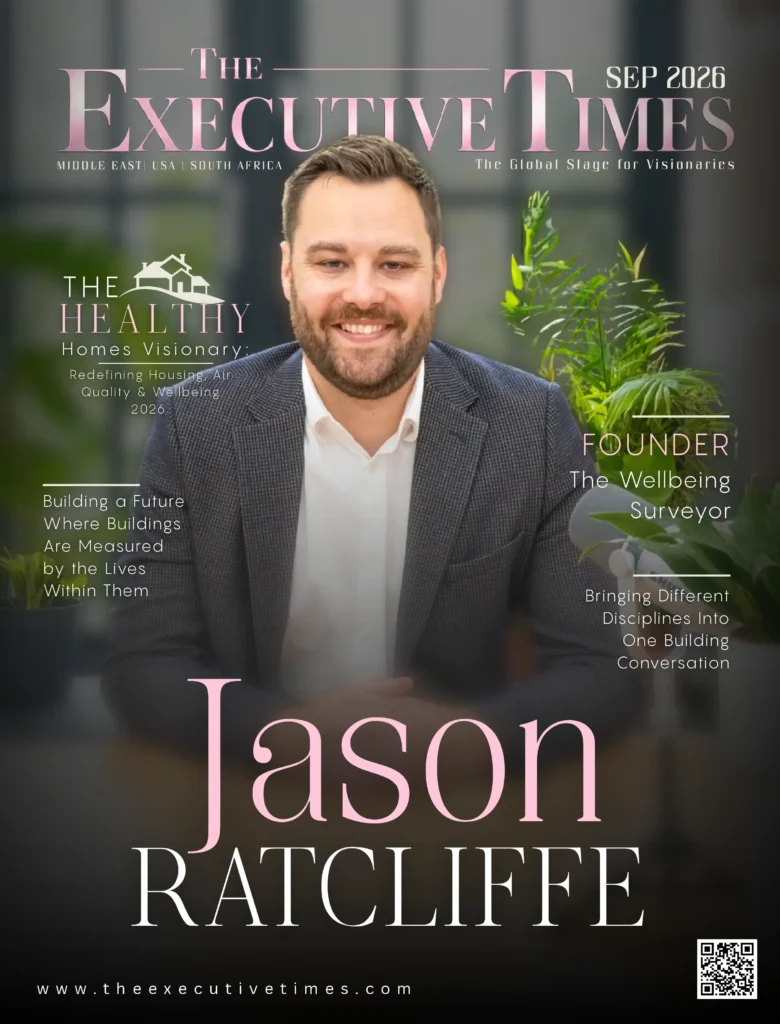
Cover Story -
Jason Ratcliffe
Founder of The Wellbeing Surveyor
"The Healthy Homes Visionary: Redefining Housing, Air Quality & Wellbeing – 2026"
Jason Ratcliffe: Building a Future Where Buildings Are Measured by the Lives Within Them
The condition of a building can be measured in walls, roofs, damp and maintenance. Its deeper impact is measured in the people who live and work inside it.
When Buildings Became More Than Structures
Every building tells a story through its physical condition. Roofs deteriorate, walls develop problems, damp appears, and maintenance requirements become visible through conventional inspections.
But Jason Ratcliffe began paying attention to another part of that story.
As Founder and Wellbeing Surveyor, Ratcliffe built The Wellbeing Surveyor around a question that traditional surveying did not always place at the centre: what does the building itself mean for the people living inside it?
Homeowners repeatedly described experiences that could not easily be reduced to a structural report. Poor sleep, recurring respiratory problems, headaches, fatigue, and discomfort pointed toward a wider relationship between buildings and human wellbeing.
That gap became the foundation for something different.
Ratcliffe’s surveying background gave him an understanding of buildings, while further study in public health, sustainability, and research expanded the lens through which he viewed them. A building, in his philosophy, should not be assessed only by whether it is structurally sound or how efficiently it performs.
It should also be considered in terms of how it supports the health and quality of life of the people inside.
That principle became The Wellbeing Surveyor, a practice that has grown beyond consultancy into research, education, and innovation.
As Ratcliffe puts it, “Buildings should not simply stand for longer; they should help people live better.”
A Personal Recovery That Changed the Measure of Wellbeing
The philosophy behind Ratcliffe’s work is also informed by personal experience.
A brain haemorrhage fundamentally changed his outlook. The process of recovery introduced lessons that no textbook could fully provide, particularly around patience and resilience.
It also gave him a more personal understanding of how deeply environments can affect recovery, concentration, and stress.
Rather than allowing adversity to define the direction of his life, Ratcliffe used the experience to refine his purpose. It strengthened his commitment to evidence-led work and to creating work that is deliberately focused on improving people’s lives rather than simply documenting the condition of buildings.
The experience added another dimension to a question he was already pursuing professionally: if environments influence how people feel and function, then understanding that relationship has to matter.
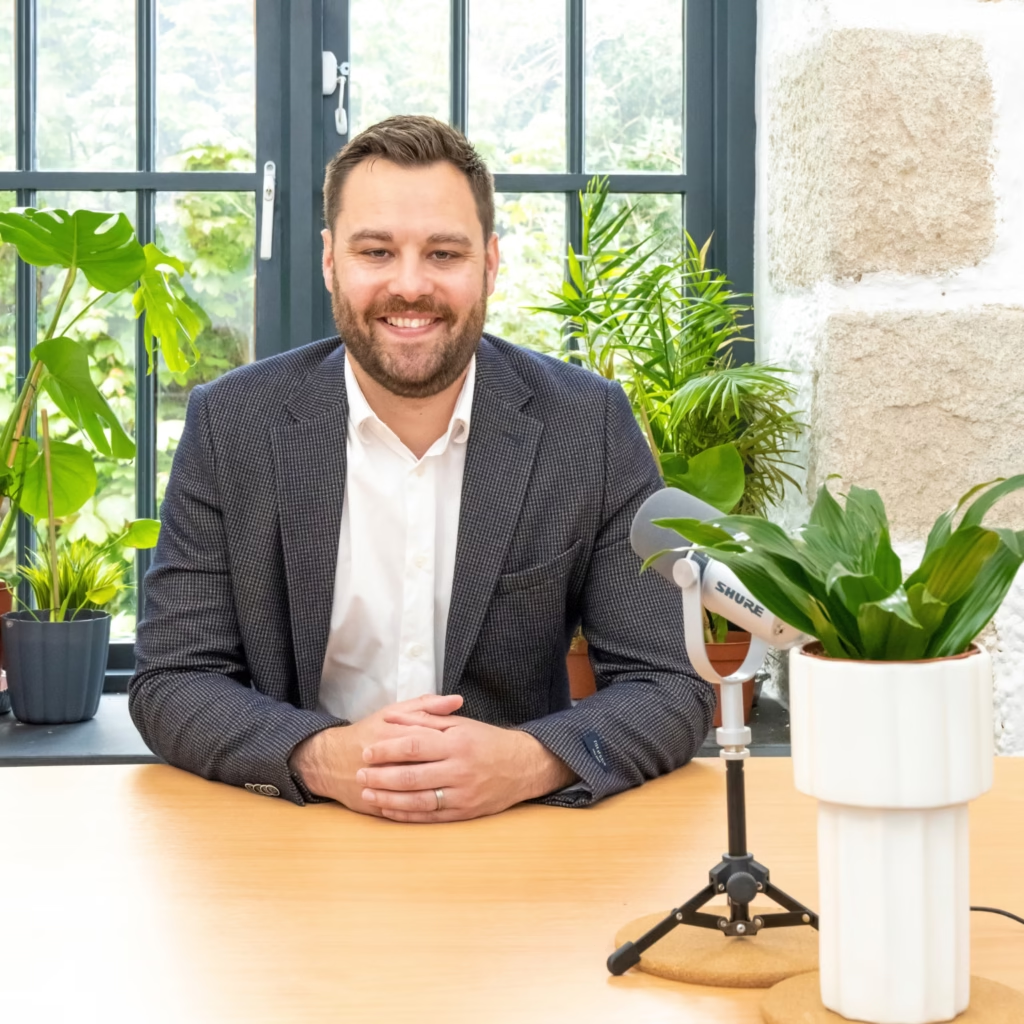
Bringing Different Disciplines Into One Building Conversation
The Wellbeing Surveyor operates from a deliberately multidisciplinary position.
Surveying does not exist separately from public health. Environmental science is not treated as unrelated to sustainability. Instead, these fields are brought together to understand the broader environmental ecosystem surrounding a building.
The objective is to move beyond isolated measurements and examine the relationship between the environment and the people experiencing it.
“We measure more than buildings, we seek to understand how buildings influence people,” Ratcliffe says.
That philosophy also shapes the practice’s work beyond direct consultancy. The organisation invests in pioneering research, independent product evaluation, and healthy building evidence, with a number of initiatives remaining confidential until publication or launch.
Across those activities, the purpose remains consistent: make healthy buildings measurable, practical, and accessible.
The Question That Gave Purpose More Weight Than Activity
Earlier in his career, Ratcliffe associated professional success with accepting opportunities whenever they appeared. Over time, however, he began to see the difference between being busy and being purposeful.
That shift changed the way he evaluates work.
Today, he applies a simple test to every project: does it genuinely improve people’s lives, or advance knowledge?
The question provides a filter that constant activity could not.
Rather than measuring progress by the number of opportunities accepted, Ratcliffe measures it by whether the work contributes to the larger purpose he has established around healthier buildings.
That change in perspective has helped keep the long-term direction of The Wellbeing Surveyor clear.
A Practice Shaped by People as Much as Research
Ratcliffe’s journey has not been built alone.
His wife, Sophie, has supported him throughout the development of the practice, while mentors from surveying, medicine, academia, and environmental science have continually challenged him to look deeper and think differently.
But another group has played an equally important role: homeowners.
Thousands of conversations with people experiencing problems within their own homes provided a form of evidence that could not simply be found in technical reports. Their lived experiences repeatedly reinforced the idea that healthy buildings are not an abstract concept.
They are a human need.
Those conversations helped connect Ratcliffe’s professional knowledge with the realities experienced by the people his work is ultimately intended to serve.

Collaboration Is Becoming the Infrastructure of Healthier Buildings
Creating healthier buildings cannot be solved through one discipline alone.
Researchers contribute evidence. Clinicians bring health perspectives. Engineers understand technical systems. Architects shape spaces. Surveyors understand buildings. Technology innovators contribute new ways of measuring, understanding, and applying information.
Ratcliffe sees the future of healthy buildings in bringing these different perspectives closer together.
Through partnerships, he is working toward a broader movement that connects disciplines that have not always operated within the same conversation. The objective is to accelerate evidence-based change across the industry rather than leaving individual fields to solve separate pieces of the same problem.
For Ratcliffe, collaboration is therefore not simply a professional advantage. It is part of the architecture required to move the healthy-building conversation forward.
Meaningful Problems Matter More Than Professional Labels
Ratcliffe’s advice to people entering the field is closely connected to the way he built his own practice.
Stay curious.
Do not make titles or awards the destination. Instead, identify meaningful problems and work toward solving them.
He encourages people to read widely, question assumptions, and remain committed to learning. These are not principles he developed separately from his career. They describe the process through which The Wellbeing Surveyor itself evolved.
For Ratcliffe, innovation begins with better questions.
Technology, research, and new approaches become more meaningful when they are directed toward problems that genuinely matter rather than used simply because they are new.
Visibility Matters When It Starts a Bigger Conversation
Recognition has a role in Ratcliffe’s work, but he does not view it primarily as a personal trophy.
Its value lies in what it makes possible.
Every article, keynote, and interview creates another opportunity to introduce people to the idea that healthier buildings can contribute to better lives. Visibility becomes useful when it helps move the subject into conversations that may not otherwise happen.
That is also how Ratcliffe views the road ahead.
His ambition is to continue expanding research, education, and international collaboration while establishing The Wellbeing Surveyor as a recognised voice for healthy buildings.
The objective is not simply to make the name familiar.
It is to make the subject impossible to ignore.
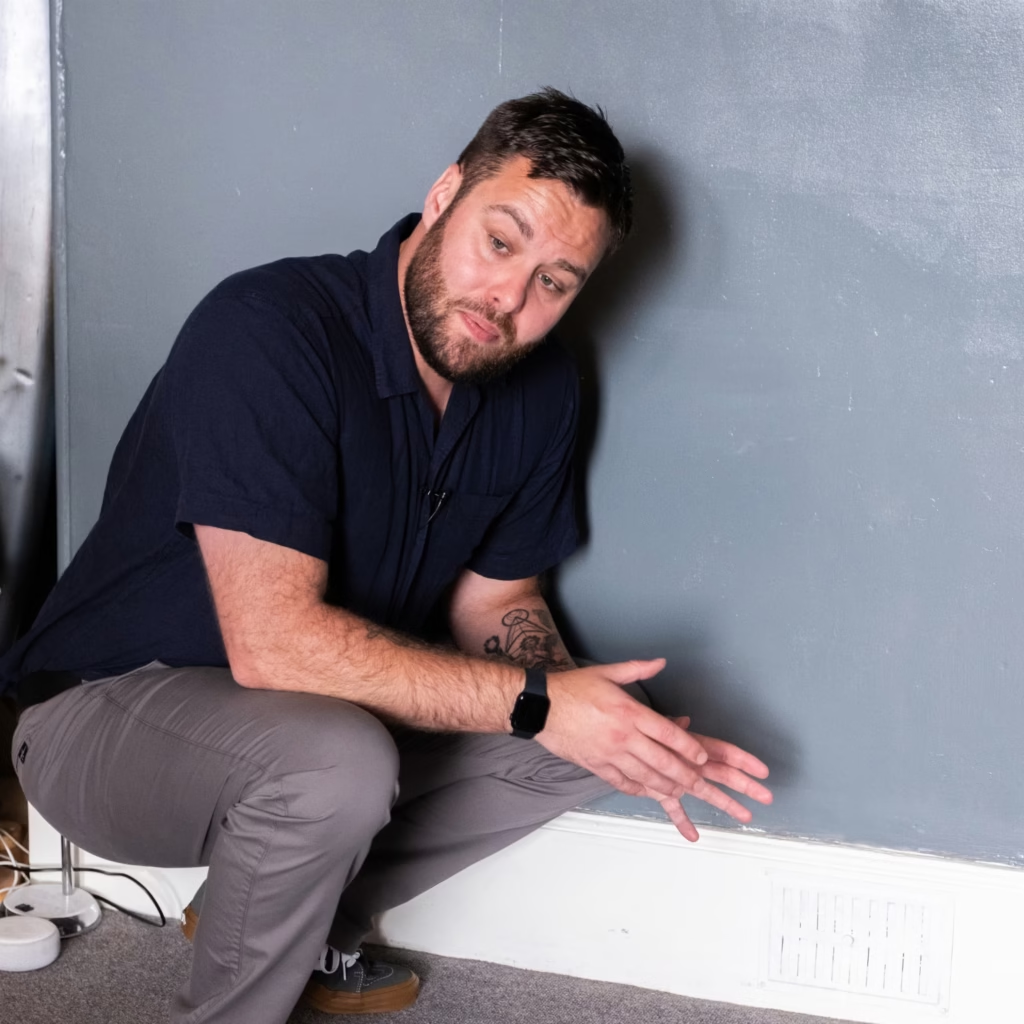
Safety and Sustainability Are Only the Starting Point
People spend around ninety per cent of their lives indoors, yet the relationship between indoor environments and human health remains something many people understand far less than they understand the basic physical condition of a building.
Ratcliffe believes that needs to change.
A building should not stop at being safe. It should not stop at being sustainable. The next expectation should be that the environment actively supports human wellbeing.
His comparison is deliberately straightforward: healthy buildings should become as normal as seatbelts and smoke alarms.
That shift would represent a broader change in how buildings are understood. Health would no longer be treated as a secondary consideration added after structural and environmental requirements have been addressed.
It would become part of the definition of a successful building.
The Work Is Bigger Than One Career
Ratcliffe does not describe The Wellbeing Surveyor as the final achievement of a professional journey.
He sees it as the beginning of something larger.
The ambition is for healthy-building thinking to move beyond a specialist practice and eventually become an expected part of how homes, schools, workplaces, and healthcare buildings are designed and assessed.
The real measure of success would therefore come when future generations no longer have to argue for the importance of human wellbeing within buildings because that expectation has already become standard.
That is the movement Ratcliffe is working toward.
Not simply more assessments. Not simply more research. Not simply greater recognition.
A future in which people naturally expect the places they inhabit to support the lives they are built around.
The career continues, but the larger objective has already become clear: to help turn healthy buildings from a specialist idea into an everyday standard.