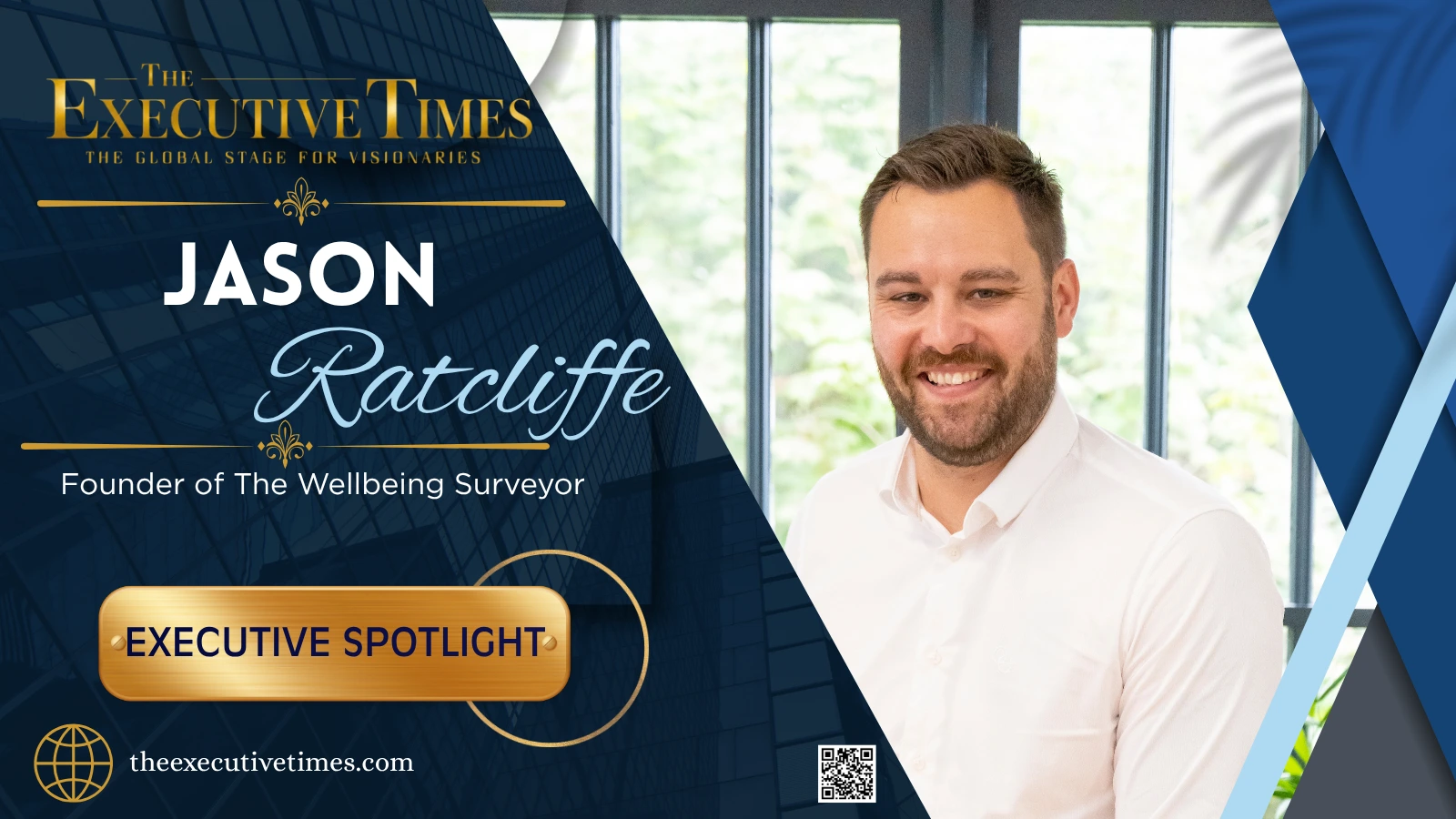
Jason Ratcliffe: Rethinking what it means to build a healthy environment
Buildings are usually judged by their structure and performance. Jason Ratcliffe believes their real value should also be reflected in the wellbeing of the people who use them.
Looking beyond the physical condition of a building
A building can pass an inspection and still leave important questions unanswered. Its walls may be sound, its roof secure and its maintenance up to date, but what about the people spending their days inside it?
This is the question that shaped Jason Ratcliffe’s work as Founder and Wellbeing Surveyor. Through The Wellbeing Surveyor, he has developed an approach that looks beyond conventional property assessments to consider the relationship between indoor environments and human health.
The direction became clearer through conversations with homeowners. People described poor sleep, respiratory difficulties, headaches, fatigue and other forms of discomfort. These experiences suggested that the condition of a property could not always be understood through its physical features alone.
Ratcliffe’s background in surveying provided the starting point. Further study in public health, sustainability and research helped him examine the wider factors influencing how people experience buildings. He came to believe that a property’s value should include more than its structural condition or efficiency. It should also account for the effect it has on everyday life.
As he explains, “Buildings should not simply stand for longer; they should help people live better.”
Personal experience and a clearer sense of purpose
Ratcliffe’s commitment to wellbeing is informed not only by professional observation but also by a significant personal experience. A brain haemorrhage brought an unexpected challenge into his life and made recovery a central part of his journey.
The experience required patience and resilience, while giving him a more personal appreciation of the relationship between surroundings and wellbeing. It also strengthened his interest in how environments can influence recovery, concentration and stress.
Rather than stepping away from his professional ambitions, Ratcliffe used the experience to reconsider what he wanted his work to achieve. Improving people’s lives became a more important measure of progress than simply completing projects or producing reports.
That perspective continues to influence the decisions he makes and the direction in which he wants The Wellbeing Surveyor to develop.
Connecting knowledge that has traditionally been kept apart
Healthy buildings are not a subject that can be addressed through surveying alone. Ratcliffe’s approach brings together knowledge from surveying, public health, environmental science and sustainability.
Each discipline offers a different way of understanding the built environment. Combining them makes it possible to consider not only the physical characteristics of a property but also the wider conditions that affect the people living or working there.
“We measure more than buildings, we seek to understand how buildings influence people,” Ratcliffe says.
This thinking extends beyond consultancy. The Wellbeing Surveyor is also involved in research, independent product evaluation and the development of evidence around healthier buildings. Some initiatives remain confidential until they are ready for publication or launch.
Across these areas, the intention is to make healthy-building principles more measurable and practical, so they can become easier to understand and apply.
Choosing work for its impact, not its volume
Like many professionals, Ratcliffe once viewed new opportunities as something worth pursuing whenever they appeared. Experience gradually changed that outlook. He began to recognise that a full schedule does not necessarily mean meaningful progress.
He now evaluates projects through a straightforward question: does the work improve people’s lives or contribute to knowledge?
This has become an important way of deciding where his time and attention should go. Instead of measuring success by how many opportunities he accepts, he looks at whether the work supports the wider purpose behind The Wellbeing Surveyor.
The distinction has helped him maintain a clearer direction while balancing consultancy, research and longer-term ambitions.
Learning from homeowners and the people around him
The development of the practice has depended on more than professional knowledge. Ratcliffe credits his wife, Sophie, for her support throughout the journey, while mentors from surveying, medicine, academia and environmental science have helped him question established ideas and consider new perspectives.
Homeowners have also played a central role. Thousands of conversations have brought him closer to the problems people encounter in their own homes. Their experiences have helped demonstrate why healthy buildings matter beyond technical discussions or industry terminology.
For Ratcliffe, these conversations provide an important reminder of the people behind every property assessment. The purpose of the work is not simply to understand a building, but to understand how its environment affects those who depend on it.
Why progress requires collaboration
The future of healthy buildings will depend on people with different areas of expertise working towards shared goals.
Researchers can develop evidence, clinicians can contribute health perspectives, engineers can examine technical systems, and architects and surveyors can bring their understanding of how buildings are designed, constructed and assessed. Technology innovators can add new ways to measure and interpret environmental information.
Ratcliffe wants to encourage closer relationships between these groups. Through partnerships, he is working towards a broader conversation that brings together professionals who may traditionally have approached the subject from separate directions.
The aim is to support evidence-based change across the industry. For him, collaboration is not an additional feature of the work. It is necessary to address a subject that crosses so many professional boundaries.
A career guided by curiosity
When offering advice to people entering the field, Ratcliffe places greater importance on curiosity than professional recognition.
He encourages individuals to keep learning, read widely and question assumptions rather than becoming too focused on titles or awards. Meaningful work, in his view, begins with identifying problems that deserve attention and remaining committed to finding better ways to address them.
This approach reflects the development of his own practice. The Wellbeing Surveyor grew from questions about the relationship between buildings and people, and its future direction continues to depend on asking better questions.
New technology and research have value when they help address genuine needs. Their presence alone does not make an idea useful.
Recognition as an opportunity to raise awareness
Ratcliffe sees professional recognition as valuable when it helps bring greater attention to the subject of healthy buildings.
Articles, interviews and keynote appearances provide opportunities to reach people who may not otherwise have considered how their surroundings influence their wellbeing. The purpose of visibility is therefore larger than individual recognition. It can help introduce the conversation to homeowners, professionals and organisations.
Looking ahead, he wants to expand the practice’s work in research, education and international collaboration, while building The Wellbeing Surveyor’s position as a recognised voice in the healthy-building field.
The intention is to make the subject more widely understood and encourage more people to take it seriously.
Making wellbeing part of the building standard
People spend around ninety per cent of their lives indoors, yet the health implications of indoor environments do not always receive the same attention as structural safety or sustainability.
Ratcliffe believes this needs to change. A building should be safe and sustainable, but those qualities should not represent the end of the conversation. Its environment should also support the health and wellbeing of the people inside.
He uses a simple comparison to explain the level of acceptance he hopes to see: healthy buildings should become as normal as seatbelts and smoke alarms.
For that to happen, wellbeing needs to become part of how buildings are designed and assessed from the beginning, rather than being treated as an additional consideration later.
A wider ambition for the built environment
Ratcliffe does not see The Wellbeing Surveyor as the conclusion of his professional journey. He considers it the starting point for a wider shift in how the built environment is understood.
His ambition is to help make healthy-building principles a normal expectation across homes, schools, workplaces and healthcare settings. That will require continued research, education, collaboration and a willingness to reconsider long-standing industry practices.
Ultimately, success would mean reaching a point where people no longer have to make a special case for the importance of wellbeing in buildings. It would simply be understood as part of what a good building should provide.
For Jason Ratcliffe, the goal is not just to assess properties differently. It is to help change the expectations people have of the places where they live and work, so that buildings are judged not only by how well they stand, but also by how well they support the lives within them.